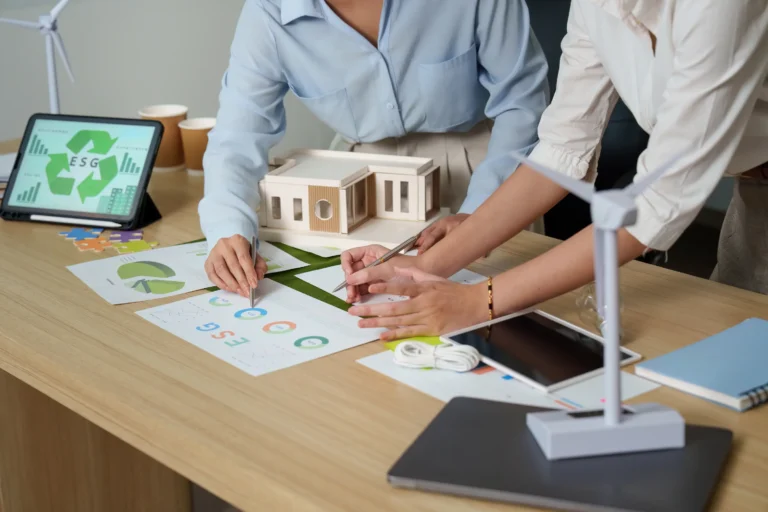
What is ESG Reporting and Why Does It Matter for Businesses in India?
Understand what ESG reporting is, why ESG reporting in India matters, key reporting standards, and how businesses can build long-term sustainability
In the real estate landscape, sustainability is becoming a design imperative. However, a critical piece of the sustainability that often gets left behind is- waste management.
We talk about energy efficiency measures, green roofs, water recycling etc., but what about the thousands of kgs of waste that buildings generate every month?
Most developments still treat waste as a post-occupancy issue, something to “manage” once the property is operational. The result?
What’s needed is, to integrate waste management right from the planning stage along with water, energy and materials.
It isn’t just about providing bins. It’s about creating a system and it includes-
Integrating waste management into the design helps in significantly reducing landfill waste, GHG emissions and handling costs; and providing easier and convenient ways to residents and staff to manage waste.
The future of real estate is “circular real estate” where waste from one process becomes input for another.
Imagine a development where:
That’s not a distant vision. It’s already happening in green-certified campuses.
As sustainability commitments tighten and urban waste challenges grow, the question isn’t Should the waste management be integrated? It’s How early can we start?
Because by the time the building opens its doors, it’s too late to design for what goes out of them.
#Sustainability #WasteManagement #RealEstate #GreenBuildings #UrbanPlanning #CircularEconomy