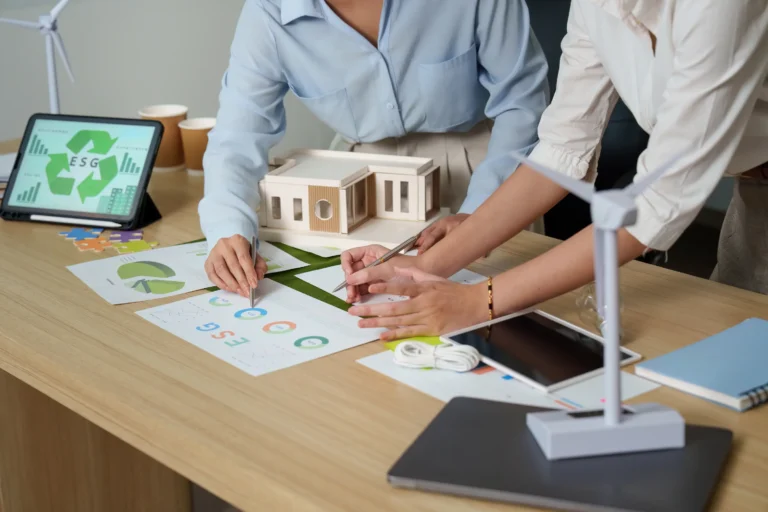
What is ESG Reporting and Why Does It Matter for Businesses in India?
Understand what ESG reporting is, why ESG reporting in India matters, key reporting standards, and how businesses can build long-term sustainability
For years, “green building” largely meant better glass, better chillers and better brochures, underpinned with an energy model to back everything up. LEED v5’s mandate fundamentally shifts the conversation from “is this design efficient?” to “how much climate and social impact is this asset truly creating throughout its lifecycle?”
And it’s shifting with a crucial timeline nuance, too. LEED v4 and v4.1 stop accepting new registrations for BD+C, ID+C, and initial O+M registrations on June 30th, 2026, after which all new projects will register under LEED v5. While existing v4/v4.1 registrations are valid until 2032, the main entryway now becomes v5. This means for the next few months, any new project will face a pivotal choice: hop on the last train for v4.1, or jump aboard the v5 express?
Instead of distributing points across numerous separate categories, LEED v5 consolidates prerequisites and credits into three core impact areas:
In essence, where v4.1 mostly rewarded good design and robust energy performance, v5 prioritizes low-carbon, people-centered, and nature-positive projects, reflecting these priorities in the weighting of the scorecard.
As we mentioned in our previous piece, climate resilience is moving from optional guidance notes into actual requirements. This is exactly what LEED v5 looks like in practice.
A Climate Resilience Assessment is now a mandatory prerequisite; all LEED v5 projects will be required to analyze current and future climate and natural hazard risks to their site-heat, flooding, storms, etc. and document how their design and operations will address these potential issues. The expectation is that this should be performed at or before the initial design and site planning phases, so it can directly inform how and where you build, rather than merely be a part of an emergency operations manual.
For asset owners, this effectively transforms resilience from “a nice (easily ignored) slide in the ESG presentation” into “a critical factor in our risk, uptime and insurability discussions” for every asset.
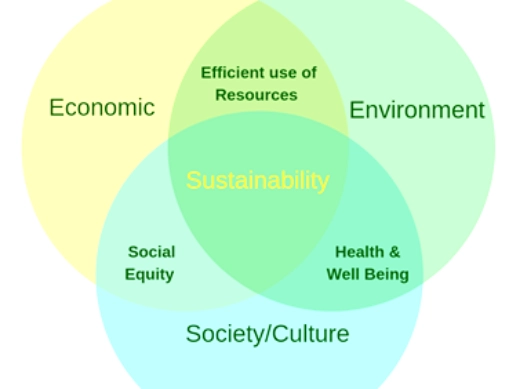
Up until now, you might have had separate documents, reports and teams responsible for:
LEED v5 deliberately brings all of these together into one unified conversation through a set of upfront, assessment-style prerequisites:
Further, enhanced planning around zerowaste operations and water efficiency bring daily services and utilities into the same big-picture conversation.
The net result? A single source of data and analysis that can simultaneously inform your LEED submission, ESG report, netzero plan, and social impact narrative. For the first time, the different sustainability elements actually talk to each other in a single framework.
While past LEED editions were excellent at pushing the market to reduce its impact by consuming less energy, less water, emitting less pollution, and producing smaller construction footprints, LEED v5 takes it a step further by asking, “What positive work is this site contributing towards climate and ecology?”.
This is reflected in:
Essentially, LEED v5 encourages you to transition from “doing slightly less bad” to actively incorporating the site into your broader adaptation and biodiversity strategy.
No-but it will undoubtedly make them more honest. While stricter, LEED v5 aligns more closely with the direction regulations, investors, and occupants are moving: carbon reduction, climate resilience, occupant health, and nature integration.
If your project is beginning design now and has a target registration date prior to June 30th, 2026, LEED v4.1 still offers a familiar and well-understood path with a wealth of tools and examples available. However, for longhold, flagship or ESG-driven assets, LEED v5 is increasingly becoming the version that “speaks the same language” as your netzero objectives and climate disclosures.
Stay tuned for part 2 if you wish to read an examined project timeline in more detail, outlining exactly what changes from the initial brief to daily operations under LEED v5, and why bringing in a consultant early on will provide more options without necessarily increasing costs.